Connect with us

Blog

Facebook is experimenting with prompts that ask users whether they are concerned that a friend is ‘becoming an extremist.’

Published

on

Facebook app

In the United States, some Facebook (FB) users are receiving a prompt asking if they are concerned that someone they know is becoming radical. Others are being alerted about the possibility of being exposed to extremist information.
It’s all part of a test that Facebook is conducting as part of its Redirect Initiative, which tries to tackle violent extremism.

This experiment is part of a wider project to see how we can provide tools and help to people on Facebook who have interacted with or been exposed to extremist content, or who know someone who is.

“Are you concerned that someone you know is becoming an extremist?” one of the notifications reads, a screen grab of which went viral on social media Thursday.

According to a screenshot shared on social media, the alert stated, “We care about avoiding extremism on Facebook.” “Others in your situation have gotten discreet help,” she says.
The user is then directed to a support page by the alert.

Another alert reads, “Violent groups try to use your anger and disillusionment.” “You have the ability to protect yourself and others right now.”
The user is also redirected to a help page as a result of the notice.

Facebook is sending users to a range of resources, including Life After Hate, an advocacy group that helps people quit violent far-right movements.

Over the last few years, Facebook has been blasted by detractors for failing to take sufficient steps to combat extremist content on its platform. For example, in 2020, the firm was chastised for failing to take down a militia group’s Facebook page, which encouraged armed residents to go to the streets of Kenosha, Wisconsin.

The company has also committed to do a better job of preventing the spread of false information and conspiracy theories. In May, Facebook’s independent oversight board encouraged the corporation to look into the role of its platform in the January 6 uprising.

Continue Reading
Click to comment

Leave a Reply

Your email address will not be published. Required fields are marked *

Articles

The Impact of Technology in Boosting Education

Published

on

By

tech education

The COVID-19 situation has shaped the global education system. Technology has affected our lives in almost every way. One of the most important revolutionary changes technology has made is with education. Classrooms now have smart-boards, students have tablets accessible as learning tools, and technology today makes distance learning and acquiring a degree easier than ever.

Universities like NC IUL is one of the few among many offering online degree acquisitions that are equally as accredited as the traditional, offline ones. Technology continuously improves the way we learn and the speed at which we can access huge amounts of information. Here is a quick overview of how technology has affected education and how it might be in the nearest future.

One of the most important aspects of technology in education has been its ability to create a global platform. Education with the help of technology has crossed borders globally and with a seamless transition. Online courses can be accessed by students across the world and people are able to have video conferences to offer a personalized teaching experience. Assessments are now all electronic and web based, making it easier for online students to receive results fast and effectively.

Remember carrying stacks of textbooks from class to class? Well, you can forget that now because textbooks are becoming digital. Students can have access to all of their learning materials in PDF files or online through their educational institutions. These eBooks make studying more affordable and accessible to students, increasing their ability to actually use the materials. This has been a huge shift from the reliance on paper-based books and will continue to revolutionize the way we learn.

You may not think of video games as a learning tool at first, but many of them have been designed to help students in many instances. Video games can help stimulate the mind to help with problem-solving skills by developing them to be more educationally goal-oriented. Even video games that are not educational on the surface may help us learn and gather information. This also goes along with mobile games. Many students have access to a smart device and can solve puzzles or learn on the go. Multimedia tools are also being used to enhance the educational experience. Videos and animation have created learning tools for the more visually oriented students making it more fun and engaging for those who can learn better this way.

Students are definitely becoming more engaged with technology tools because it is what they have grown up with. If you think about how most students in universities have been raised surrounded by video games, new gadgets, and the Internet, then you can understand how important technology has become for education. Students can access more information quicker from anywhere they might be with the aid of technological tools. What this shows is that the progression will be positive and help globalize education by creating a common language: new technology. It will be interesting to see what the future holds for our educational systems and how it will adapt to this encouraging trend.

Continue Reading

Blog

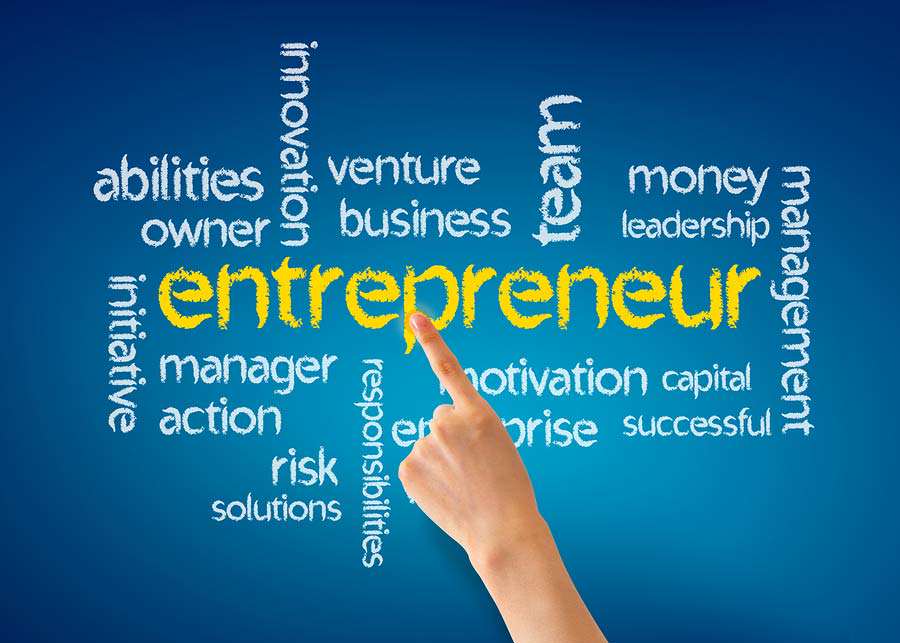
Not Everyone is an Entrepreneur

Avatar photo

Published

on

entrepreneur

There is a difference between an entrepreneur and small-business owner.

We have gotten a bit carried away with the “entrepreneur” label. Stop it. So many business people are now considered entrepreneurs that it is now easier to figure out who’s who if we just have the non-entrepreneurs raise their hands.

These fundamental definitions and an understanding of their roles will shape the future economy with more force than we may realize.

The entrepreneurs I know…

The fruit of an entrepreneur’s labor is the insatiable need for more, more and more. We can’t stop, and we’re not being hyperbolic when we say that.

Despite the purveying assumption, entrepreneurs are far from fearless. In fact, entrepreneurs are less driven by some moral authority or economic reward and more by the paralyzing fear of failure and the fear of missed opportunity. The true fear is not living up to what the entrepreneur truly believes is the maximized opportunity. This fear of perceived failure is worse than failure itself. Silicon Valley types don’t celebrate failure, because they’re full of themselves; they celebrate it because it’s too hard to look at themselves in the mirror when they fail. The concept of “failing forward” or “you aren’t pushing hard enough if you aren’t failing” are all mantras that make some entrepreneurs too happy to just continue to rinse and repeat the venture life-cycle.

Nonetheless, VC funding pours in, and the population of “entrepreneurs” continues to grow. There’s no shortage of incubators accelerators and free infrastructure (increasing at an average of 50% each year between 2008 and 2014) to support our efforts and feed our endeavors.

X  (previously Google X) says that “instead of a mere 10 percent gain, a moonshot aims for a 10x improvement over what currently exists. The combination of a huge problem, a radical solution to that problem, and the breakthrough technology that just might make that solution possible, is the essence of a moonshot.” What’s missing here is the fact that it takes an entrepreneur’s Draconian thirst to add 10x the ambition with no predefined path, a healthy amount of someone else’s money, and the ability to convince others to join them on the crazy journey.

Those are the entrepreneurs I know. And if nothing else, that description is more accurate than what we’ve been hearing for the past decade. Entrepreneurs don’t dare to be different, they are different.

You might be a small-business owner if…

Small-business owners, on the contrary, build businesses incrementally, bit by bit. They often solve smaller, localized problems with their business and are not looking to radically move the needle. They’re the broad base of employment in America for this reason — they cover a lot of surface area, but aren’t disrupting the status quo, creating entire new fields, or accelerating an entire market forward.

Small-business owners seek lower risk — if it’s a moonshot, it’s by accident. It all tracks back to a timeline that maps far beyond that of entrepreneurs. Small businesses are created with the goal of sustaining a living for the owners and their employees. There’s nothing special or serial about them. These are the people you should ask about work-life balance in an interview.

Furthermore, their products and services often live in the realm of known and established offerings. They live and operate in their local community first and foremost. The local automotive store down the street who’s been there for 50 years? The one who just opened up who will be there for another 50? Those are both small-business owners, tokens of their community who’s definition of winning comes down to how confident they’ll be opening their doors tomorrow. Their broken definition of winning is really about surviving and relative thriving but not truly winning.

The VCs aren’t there to back them or their 15 percent growth models, their march to profitability is a steady cadence of tactical steps in a defined direction with low risk with even lower return. While that direction may change, it’s not at the whim of the market or investor pressure. There is also little pivoting or course correction because small-business owners aren’t looking to discover a new world, but instead just happy with walking the well-established path.

If entrepreneurs are our economy’s moonshots, small business owners are the gravity that keeps our system grounded.

Decoupling is the only way

While both entrepreneurs and small-business owners may have some similar entrepreneurial genes at their core, we can’t ignore the differences between the two that ultimately define their role in our economy. We shouldn’t be angry that everyone isn’t an entrepreneur, but celebrate it. The world and economy needs balance.

Entrepreneurs, at their core, are rare, transformative and risky. They are going to propel the society forward with big leaps of creative disruption. Small-business owners give us a stable base that de-risks the moonshots and protects us from the fallout of failures.

I’m not asking you to make a value judgement of one over the other, but consider this: we’ve been encouraging people to become entrepreneurs for decades and the startup failure rate has reached 90 percent.

We shouldn’t want everyone to be an entrepreneur. It’s not about separating the professionals from the amateurs, either. It’s about responsible approaches to economic growth and societal change.

Let the change agents do the change — real entrepreneurs are well-suited to shape the future. We need small-business owners to anchor our present, and too many of them are being lured away from that important work by an inauthentic, woefully misguided perception of what it means to be an entrepreneur.

We need to strike the right balance of the two, and that starts with vocabulary and perceptions. Imagine if all businesses had a 90 percent failure rate? What if no businesses made giant breakthroughs? When the balance between small business people and entrepreneurs gets out of whack, we can do remarkable harm.

The best way to prevent that is to stop pretending you’re something you’re not.

Continue Reading

Blog

7 things every new programmer should know Before Coding

Avatar photo

Published

on

programmer

The programming language expertise is an essential part of the development of software. Developers also need to be aware of what’s going on down the stack. Developers who have been around the block several times, however, want you to know that there are a lot of things you should know about writing code for a living that you can’t learn from a college course or a coding academy.

To find out what those things are, we work with a lot of Programmers at the top level. We asked them what they wish they’d known when they first started to code for a living. Whether you’re a recent graduate starting your first developer job, or an older worker who’s transitioned to programming, this will give you a good starting point.

Be Passionate

Love what you are doing, be creative, and do it the best way, better than yesterday.

Programmers are a subset of creators who has the ability of creating the Future and the responsibility of shaping the world said Okpala Izunna, The Lead Software Developer at Information Stash.

In the venture of been passionate, you must love coding in the sense that you have to code clean. No body wants disaster and no professional developer will want to work with a code that is filled with garbage.

Learn about the underlying systems

A big part of software development, of course, is knowing programming languages. But, as several people shared with us, developers also need to know about what’s going on lower down the stack.
Lots of languages abstract away from what is happening at the system level, and that abstraction is useful because it allows developers to be more productive much of the time. But when you hit a roadblock, a really nasty bug, and need a deeper understanding of what’s happening under the hood.

As a developer, chances are you’ll spend a good deal of time working with a fancy IDE or code editor. However, also knowing how to get things done at the command line could occasionally make your life easier.

Your debugger is your friend

A good chunk of your time as a coder will involve tracking down bugs. Learn to use your debugger!! Take that extra day or two to configure it. When you don’t see the expected result, just debug it: set breakpoints, step through your code, and especially 3rd party code. It will save you days of frustration, and even better, you will learn things about coding you can only learn by reading someone else’s code.

Learn to write tests

Some developers feel that unit testing, that is, writing tests to validate that small units of code are doing what they should, is critical. We believe the best bit of advice we’d give someone who wants to learn to program is to learn to write good tests and learn to write your tests really early in the process.

Plan on change and learning new systems

Everyone knows that technology changes quickly these days. That applies not only to our beloved consumer goods, but also to the underlying systems, languages, and tools that programmers use to do their jobs.
We recommends that new coders be prepared for, and stay ahead of, change. Right now, we’re of the mind that you should plan to learn essentially brand new technology stack every ~ 4 years, Good foundational knowledge is always applicable, but the tools and tech you’ll use every day will be completely different every 4 years.

Projects are never written in just one language using one framework anymore… You are never going to work on just one thing in one project, get used to moving from project to project and from language/technology to language/technology.

Play well with others

Despite the stereotypical notion of programmers working alone with their headphones on, developers still have to work other people. Big projects mean lots of moving parts coming together and how they fit together and divide up the problem can create impossible engineering problems if you aren’t careful. Before trying to optimize that one algorithm, work with the team and make sure there isn’t a re-division of the problem that makes each person’s problem simpler. Coding is a team sport!

If you can’t figure it out yourself by re-intuiting the API or debugging, ask for help. Just because you think you’ve written a masterpiece doesn’t mean it isn’t crap or can’t be better. Just like in college, other people in the room have the same questions, or questions only you can answer. Develop a rapport with colleagues. Often just stating the problem aloud enables a open mind moments.
Stepping up to the plate and doing what is asked of you even though it is grunt work will keep you employed as well. But, in that situation, But be careful, you may get stuck doing it all the time.

Continue Reading

Trending